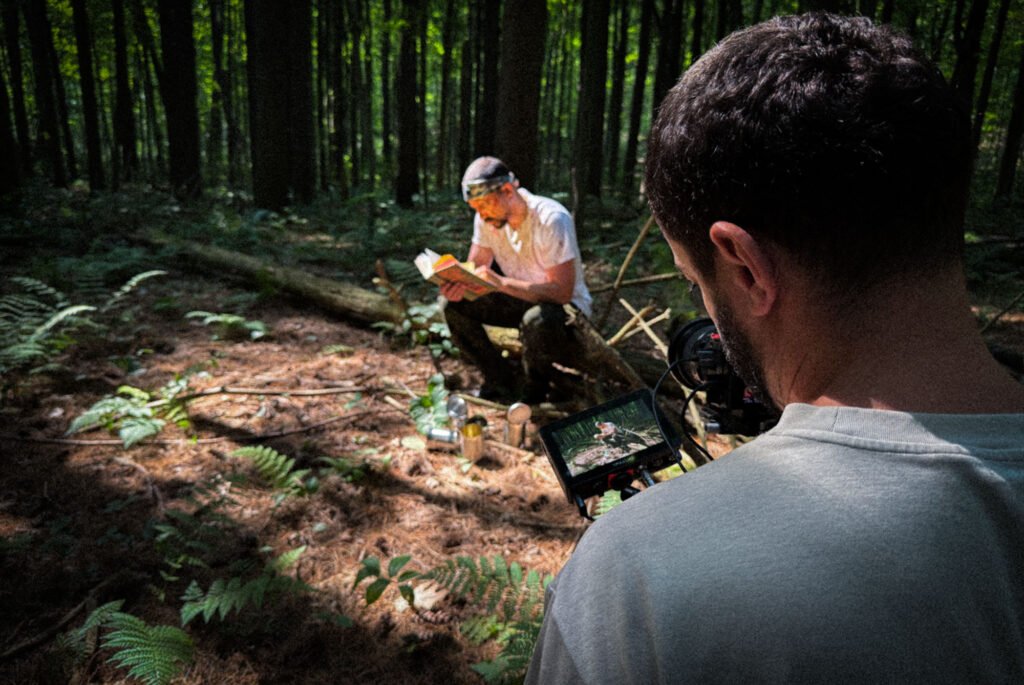
Skyrex Productions
A few months ago, someone asked us if we wanted to shoot a vertical drama series.
Fifty-two episodes. One minute each. Five days of shooting. We said yes, mostly because we were curious. We had no idea what we were walking into.
What we found surprised us. The market is massive. The demand is growing. And the film industry has a complicated relationship with it. Some people call it the future. Others call it trash. Most people just do not understand it yet.
So let me break down what we learned. This is not a hype piece. It is just what we discovered by doing the work and talking to people who have been in this space longer than us.
What Actually Is a Vertical Drama?
A vertical drama is a short, serialized story filmed in portrait mode for your phone. Episodes run one to three minutes. A full series might have 50 to 100 episodes. The pacing is fast. Every episode ends on a cliffhanger. The goal is to make you watch just one more.
If that sounds like TikTok but with a plot, you are not wrong. The format was born in China around 2018, spread to the rest of Asia, and landed in the United States a couple of years ago. Now it is everywhere.
Think of it as a soap opera designed for the scroll. Intense drama. Big twists. No slow establishing shots. Every second counts.
I am not going to bury the lead here. The market is enormous.
Global microdrama revenues hit 11 billion dollars in 2025. That is not a typo. Eleven billion. The number is expected to reach 14 billion by the end of 2026. Some estimates put the broader market as high as 26 billion dollars globally.
And here is the part that got our attention. In the United States, viewers now spend more time per day watching vertical dramas on their phones than they spend on Netflix, Disney Plus, or Amazon Prime Video on mobile devices.
That is not a small trend. That is a fundamental shift in how people consume entertainment.
The audience skews toward women aged 25 to 45, though platforms are actively expanding into other demographics. In Mexico, the app DramaBox generates more daily usage than Disney Plus. In the United Kingdom, FlickReels beats Amazon Prime Video on daily minutes.
The apps driving this growth include ReelShort, DramaBox, ShortMax, FlexTV, and dozens of others. And the money flowing into these platforms is real. Former Miramax CEO Bill Block launched a new vertical drama app called GammaTime with 14 million dollars in funding from investors including Kim Kardashian, Kris Jenner, and Reddit co-founder Alexis Ohanian. Fox Entertainment recently took an equity stake in a vertical drama company and committed to making more than 200 shows.
How the Money Works
The business model is pretty simple.
You watch the first few episodes for free. Then you either pay a small amount per episode or watch ads to continue. It sounds old fashioned, but it works. Some platforms also offer subscriptions.
Production budgets are small compared to traditional TV. A typical vertical series costs between 150,000 and 300,000 dollars for a full season. More polished projects can run up to half a million. Compare that to a single episode of a network drama, which can cost millions, and you start to see the appeal.
The shooting schedules are aggressive. Some vertical series wrap in as few as five days. Others take a few weeks. But the pace is always fast. You do not have time for multiple takes or elaborate blocking. You have to know what you want and get it quickly.
Why Film People Are Uncomfortable
Here is where things get interesting.
There is a lot of stigma around vertical dramas in the traditional film world. I felt it myself before we took our first project. The format gets called lowbrow. Cheap. Addictive in a bad way. A soap opera on cocaine, as one producer put it.
Some of that criticism is fair. The writing can be clunky. The acting is not always great. Plots often lean on tropes like billionaires, werewolves, and surprise pregnancies. There is a fixation on abusive relationships and violent male protagonists that turns a lot of people off.
But here is what I noticed. The people who criticize vertical dramas the loudest have usually never made one. And the people who actually work on them have a different story.
In Los Angeles, where traditional film and television production has slowed down significantly, underemployed crew and actors are turning to vertical dramas to pay the bills. One actress told The Hollywood Reporter that she went from saying “I do not want to do those, they are terrible” to “I would just like to make money acting.”
That is not a sellout story. That is a survival story.
And the quality is improving. Major players are entering the space with real budgets and professional talent. The new wave of vertical dramas is starting to look less like a side hustle and more like a legitimate production vertical.
What We Learned Shooting a 52-Episode Series in Five Days
We came into this with our documentary background. That turned out to be both an advantage and a disadvantage.
The advantage was comfort with fast, lean shooting. Documentaries teach you to move quickly, adapt on the fly, and get the shot without a lot of fuss. Those skills translated well to the vertical format.
The disadvantage was everything else. The framing is completely different. In a vertical series, the action happens in a 9:16 ratio, not the 16:9 we are used to. You have to rethink every shot. Close ups become your bread and butter. Wide shots are almost useless because the frame is too narrow.
We also had to learn a new rhythm. In a traditional documentary, you let moments breathe. In a vertical drama, you cannot. Every scene has to move the story forward immediately. Every episode has to end on a cliffhanger that makes someone watch the next one.
Shooting 52 episodes in five days meant we had no room for error. Pre-production was everything. We storyboarded every shot. We rehearsed the actors until they could run through the scenes without thinking. We built a schedule down to the minute and stuck to it.
It was exhausting. But it worked.
Where the Market Is Headed
The next few years are going to be interesting.
Analysts expect the market to keep growing. Some projections put the global microdrama market at 40 to 50 billion dollars by the early 2030s. That kind of growth attracts attention. Traditional studios are starting to explore the space. More platforms are launching every month.
At the same time, the stigma is fading. Not because people suddenly love bad acting and werewolf plots. Because the quality is rising. More professional writers, directors, and crew are entering the space. Budgets are increasing. The best vertical dramas are starting to look like real television, just shorter and built for your phone.
We are still early in this story. The format is only a few years old in Western markets. No one knows exactly where it goes from here. But dismissing it as a fad feels like a mistake.
Should You Get Into Vertical Dramas?
If you are a production company or a filmmaker, the answer depends on what you want.
If you want to make money and stay busy, vertical dramas are a real option. The demand for content is high. Platforms need shows. The production cycle is fast. You can turn a project around in weeks instead of years.
If you want to make art, you might be frustrated. The constraints are real. The pacing is relentless. The audience expects certain tropes. You do not have time for subtlety.
But here is what I think. The best work in any format comes from people who understand the rules before they break them. Learning how to tell a story in one minute episodes will make you a better filmmaker. It forces you to think about structure, pacing, and emotional beats in a way that longer formats never do.
We learned a lot from our first vertical drama project. We will probably do another one. Not because we are abandoning documentaries or commercial work. Because the skills are transferable and the market is real.
The Bottom Line
Vertical dramas are not going away. The numbers are too big. The audience is too engaged. The platforms are too well funded.
The stigma is real, but it is also fading. The same thing happened with web series ten years ago. The same thing happened with YouTube. The same thing happened with every new format that disrupted the old way of doing things.
We do not know if vertical dramas are the future. But we know they are the present. And ignoring them feels like a missed opportunity.
If you are curious about the space, our advice is simple. Watch a few. See what works. Talk to people who have made them. And if you get a chance to work on one, take it. You might learn something.
Let Us Talk About Your Project
If you have been thinking about making a video and you are not sure where to start, I would love to hear what you are working on. No pressure. No sales pitch. Just a conversation about your story and whether we are the right people to help you tell it.
Call us: 647.564.4412
Or send us a message through the website.
Internal Links:
-
- See our documentary production work
- Read our case study on Vertical Series
- Learn about our Impact Analytics dashboard
Latest Posts
Video Production ROI: A Measurement Guide for CMOs
Documentary vs. Commercial: Why Toronto Brands Are Choosing Documentary-Style Storytelling
Video Pricing Guide 2026: What Toronto Businesses Need to Budget

7 Video Marketing Trends That Will Define 2026 (And How to Use Them)